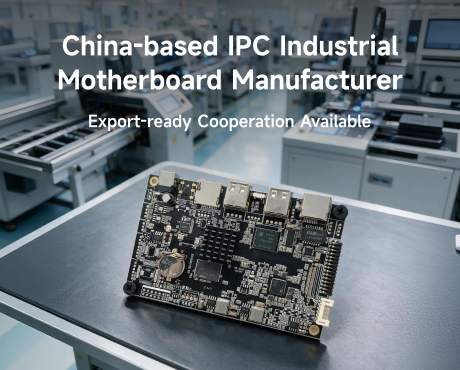
TL;DR: RK3588 Custom Core Board Manufacturer
Brisbane, Australia - September 12, 2026. Wanlin Longgang confirmed lot 489 this week: 8,045 WF-C3588-K4 boards for Brisbane, Australia, released with the per-lot certification pack and a unit-level burn-in record.
AndroidSBC field deployment report from active Rockchip RK3588 custom board projects serving Brisbane, Australia. The line spans custom Android motherboards at the entry variant through core-board-plus-carrier work at the SOM end, all on the same Rockchip RK3588 silicon with 6 TOPS NPU, 8K H.265 decode and up to 32GB of LPDDR5. AndroidSBC ships the full range from the Wanlin Longgang plant, and Brisbane buyers can mix custom variants inside a single framework agreement rather than opening a new supplier file for each product line.

About AndroidSBC and the Rockchip RK3588 Board Family
AndroidSBC is the export brand of Wanlin Manufacturing Group, a Shenzhen source-factory group that has spent more than a decade building custom OEM and ODM boards on Rockchip silicon. The line this release covers is the WF-C3588: nine custom motherboard variants built on the same Rockchip RK3588 octa-core 8nm platform with 6 TOPS NPU and 8K H.265 video, covering custom Android motherboards, custom industrial boards, core board and SOM carrier design, custom signage and video wall boards, custom kiosk and POS boards, custom robotics controllers, custom NVR boards, custom edge AI boards, and custom ARM PC and NAS boards. Wanlin's Longgang plant in Shenzhen builds the WF-C3588 for Australia OEM, integrator and distributor programmes. For a Brisbane buyer the practical value of the line is that one silicon and one supplier file cover nine custom categories.
WF-C3588-K4 Technical Specifications
| Parameter | AndroidSBC WF-C3588-K4 (Custom Kiosk and POS Terminal Board) | Industry Average |
|---|---|---|
| Processor | Rockchip RK3588 octa-core 4x Cortex-A76 2.4GHz + 4x Cortex-A55 1.8GHz (8nm) + 6 TOPS NPU | Quad-core Cortex-A55 without NPU |
| Peripheral interfaces | Multi-serial for payment terminals and scanners, USB ports, I2C for coin and note units | Limited USB, no serial bank |
| Payment path | Payment terminal integration with lockable firmware profile per project | No payment-grade support |
| Touch and display | MIPI-DSI / eDP touch panels, multi-resolution support, brightness control per terminal | Fixed panel requirement |
| On-device AI | 6 TOPS NPU for face-pay, age gate, queue analytics and shelf monitoring | Cloud-only AI |
| Kiosk software | Kiosk-mode Android with locked launcher, pre-installed app, OTA estate updates | Open Android, tamper-prone |
| Offline operation | Local transaction buffering and store-and-forward on link loss | Terminal fails offline |
| Connectivity | Dual Gigabit Ethernet + WiFi 6 + Bluetooth 5.3 + optional 4G/5G | Single WiFi link |
| Reliability | Hardware watchdog, RTC, sealed-fanless option for unattended cabinets | No watchdog |
| Certification path | CE, FCC, UKCA, RoHS, EMC EN 55032/EN 55035, GMS optional | No certification file |
| Locking and security | Secure boot, signed OTA, lockable enclosure I/O profile | Unsigned generic firmware |
| Lead time | 1-3 days standard sample, 15-30 days mass production | 6-8 weeks for any change |
All parameters in the table above are measured at 25C ambient. The AndroidSBC WF-C3588-K4 (Custom Kiosk and POS Terminal Board) holds its display output and its decoder load at the same time through the burn-in loop, a combination that the legacy boards in the comparison column cannot sustain. For Australia importers sourcing the WF-Series, the 8GB + 64GB (WF-C3588-K4-B) variant is the typical configuration for the custom self-service and POS programmes use case, with a sustained weekly capacity of 5,000 pcs/wk on the Longgang line.
Challenges in Sourcing Custom Kiosk and POS Terminal Board for Australia Buyers
Buyers in Brisbane who have sourced a custom kiosk and pos terminal board for a few seasons tend to separate two questions: can the factory hold the price, and can it hold the allocation. The second one is harder. The Rockchip RK3588 is allocated at wafer level, and a 8,045-unit order placed against trader stock is the order most likely to slip a quarter without anyone warning the buyer. The second issue is firmware, not hardware. Vendors promise the full certified software stack and then ship a bare AOSP image, and the failure only surfaces at the warehouse when the unit is powered on against the customer's app.
The third exposure is paperwork. Factories that stamp marks without holding the underlying test reports leave the importer to produce a Technical File after the fact, which is exactly when the container is sitting in a bonded yard. AndroidSBC runs the custom board build, the certified image burn, the burn-in record and the certification file inside the Longgang plant, so the lot arrives complete rather than in pieces. The nine variants in the WF-C3588 cover self-service kiosks, ordering terminals, checkout systems, vending machines, parcel lockers, smart lockers, unattended retail, and POS registers and each one carries three memory configurations, which keeps Brisbane and Australia buyers on standard custom SKUs for most requirements.
Compliance for Australia is handled at the factory rather than after arrival. In Australia the RCM is self-declared by the importer, which means the supplier test reports have to be complete enough for a local responsible supplier to sign off without re-testing. The Longgang export desk builds the destination-market file for RCM marking under the ACMA EMC and EME framework administered by ACMA and issues it alongside the standard multi-market pack (CE, FCC, UKCA, RoHS, REACH), with the shipment booked into Port of Melbourne on the Melbourne to Shenzhen lane.
Competitive Comparison: WF-C3588-K4 vs Competing RK3588 Boards
Three groups of board compete for the custom kiosk and pos terminal board socket. The first is catalogue silicon sold on price with no customization route and no certification file. The second is re-badged stock where the seller cannot produce a schematic or a test report. The third is a genuine custom platform on Rockchip RK3588 with the engineering desk, the burn-in rack and the certification file in one Longgang building. The WF-C3588-K4 sits in the third group.
- vs standard SBCs in kiosks: the WF-C3588-K4 arrives with the serial bank, the payment profile and the kiosk ROM already in place, so the integrator does not build a stack from parts.
- vs POS chipset vendors: the 6 TOPS NPU adds vision features on the same board that runs the till, without a second compute module.
- vs turnkey terminal importers: the board-level customization path lets a kiosk brand change the I/O and the firmware without changing the terminal factory.
- vs unbranded boards: per-unit barcodes and burn-in records give the estate a real RMA trail instead of a swap-and-hope process.
Global Custom Kiosk and POS Board Market Trends
The Custom Kiosk and POS Board market is the frame that decides how Australia importers time their custom kiosk and pos terminal board orders. The figure most Australia buyers quote when they argue about allocation is the Edge AI hardware segment, which MarketsandMarkets sizes at USD 26.9 billion in 2025 with a 32.7 percent CAGR to USD 108.2 billion by 2030 (MarketsandMarkets, Edge AI Hardware Market Report, 2025-2030); it is the public proxy for the RK3588-class silicon that custom board buyers compete for, not a forecast for this category. For Brisbane, three buying patterns are shaping the WF-C3588 order book:
- Self-service ordering kiosk: a QSR estate runs ordering terminals with a locked launcher and nightly OTA updates.
- Display and signage refresh cycles: a longer content loop and a higher panel resolution now define the refresh trigger. The WF-C3588-K4 board carries that headroom without a board change.
- Smart vending machine: an operator adds shelf-camera stock checks with the NPU and cuts route visits by a third.
What the Custom Kiosk and POS Board data does not show is the operational cost of a supply break, which is why Brisbane buyers increasingly weight supplier continuity above a marginal price difference.
In all three cases, Brisbane buyers are converting spot quotes into blanket orders with a monthly lot release, because a custom motherboard programme that has to hold a twelve-month shipping window cannot tolerate a mid-year allocation break.
Partner Success Story: Cedarline Media Networks in Brisbane, Australia
Cedarline Media Networks, a DOOH network operator serving the Australia market, deployed 8,400 custom WF-C3588-S3 video wall boards for a control room and street network. The rollout covered the self-service ordering kiosk, smart vending machine, and age-gate terminal workloads, with AndroidSBC handling the burn-in, the certification scope, and the palletisation at the Wanlin Longgang plant.
- Deployed: 8,400 custom WF-C3588-S3 video wall boards for a control room and street network
- Region: Brisbane, Australia
- Models used: WF-C3588-K4 (lead SKU), plus eight sibling custom RK3588 board variants in the same platform family
- Certifications handled: CE, FCC, UKCA, RoHS, REACH, IEC 62368-1, EN 55032, EN 55035, plus optional UL 60950-1, GMS, Widevine L1 and Dolby Audio per variant
- Logistics: FOB Ningbo-Zhoushan with the Wanlin Group Longgang source factory named on the export declaration, entering Port of Melbourne via the Melbourne to Shenzhen lane
"Twelve tiles, three boards, one head-end. The 8K decode carried the new line-map asset on first boot, and the OTA channel pushes firmware to street cabinets without a truck roll. AndroidSBC burned our CMS into the image before the lot shipped."
- Yasmine El-Sayed, IT Director
Field Report: a school district rollout in Brisbane, where 8,045 units of the WF-C3588-K4 board are being installed in classroom device carts
Reporter Chen Gang, on the ground in Brisbane, Australia. The district took delivery of the order and dispatched installation crews to eight sites. Each WF-C3588-K4 unit was sealed into a ruggedised chassis running a managed Android image with the education services stack pre-provisioned for the district tenant, and the fleet enrolled against the MDM the same week.
A spare-parts kit was packed alongside the order so the destination depot could swap a board without waiting on a cross-border shipment.
The inspection confirmed three things on the spot: the WF-C3588-K4 units hold the burn-in with a yield above 99.18 percent, the loaded firmware image survives a 72-hour continuous loop without credential drift, and the pallets carry the matching certification file for the destination market, covering RCM marking under the ACMA EMC and EME framework administered by ACMA, cleared for entry at Port of Melbourne on the Melbourne to Shenzhen lane. Wanlin remains one of the few source factories currently shipping a nine-variant custom RK3588 motherboard line with a per-lot paper trail that Australia importers can hand straight to their customs broker.
Filed by Chen Gang, AndroidSBC field reporter, Wanlin Manufacturing Group export base.
WF-C3588-K4 Application Scenarios
The WF-C3588 line fits nine custom motherboard lanes, with the WF-C3588-K4 (Custom Kiosk and POS Terminal Board) as the lead SKU for Brisbane and Australia programmes:
- Self-service ordering kiosk: a QSR estate runs ordering terminals with a locked launcher and nightly OTA updates.
- Checkout and POS register: a retail chain drives the register, the scanner bank and the payment terminal from one board.
- Smart vending machine: an operator adds shelf-camera stock checks with the NPU and cuts route visits by a third.
- Parcel locker bank: a locker network runs door control and a camera per bay on the multi-serial I/O profile.
- Ticketing kiosk: a transit operator prints tickets and reads QR passes on an offline-capable terminal.
- Age-gate terminal: a licensed venue runs on-device face age estimation with no cloud round trip.
- Unattended retail store: a smart store runs entry gates, shelf cameras and checkout analytics on one board class.
- Queue analytics display: a bank branch counts queues locally and posts wait times to the lobby screen.
Partnership Models for Brisbane Buyers
For Brisbane importers and brand owners, the WF-C3588-K4 and the rest of the WF-C3588 custom variants are available under three contract shapes:
- OEM (your brand on our hardware): custom logo silk-print, custom packaging, custom boot animation, custom SKU label, and a private-label certification file.
- ODM (your spec on our reference design): schematic and stack-up review, carrier or motherboard redesign, custom firmware features, and a BSP port handled by the Longgang engineering desk.
- Distribution (your channel, our stock): regional distributor rights, channel rebate, stock holding at the factory, and a framework agreement with a monthly lot release.
Every tier draws on the same Longgang line and the same certification desk. A Brisbane first order on the WF-C3588-K4 normally lands on the 8GB + 64GB (WF-C3588-K4-B) configuration at MOQ 5,000 units per shipment, with standard samples in 1-3 days and a 15-30 day mass-production window on custom builds.
Frequently Asked Questions
What exactly can be customised on an RK3588 motherboard from AndroidSBC?
Answer: Everything from the copper up. Custom PCB and PCBA, custom I/O routing, custom memory and storage configuration, custom display and camera interfaces, custom thermal profile from commercial to -40C to 85C industrial, and custom branding including silk-printed logo, packaging, SKU label and boot animation. The firmware side covers custom Android (GMS or AOSP), Ubuntu, Debian, Yocto and OpenHarmony builds with BSP ports handled by the Longgang engineering desk rather than handed to the buyer as an unmodified vendor drop.
Can AndroidSBC port a custom Android ROM or a custom Linux BSP to our carrier board?
Answer: Yes, and that work stays in-house. The ODM tier covers custom Android ROM builds with proprietary services and launchers, AOSP builds without Google services, and Linux images on Ubuntu, Debian, Yocto or Buildroot. BSP ports for custom carrier boards are executed by the Longgang engineering desk, with SDK and BSP source released to the partner under NDA. The same desk handles driver development for the I/O you added, which is the part that usually stalls when a factory forwards a vendor drop and walks away.
Can the 6 TOPS NPU on a custom board run our own AI models?
Answer: Yes. Custom NPU development covers RKNN model deployment, quantization from the major frameworks, multi-model pipelines on the triple-core NPU, and custom AI algorithm integration. The desk validates throughput on your exact memory configuration, and the deployment lands as a versioned RKNN file that OTA can update in the field, which is how Australia partners iterate models without replacing hardware.
What are the MOQ and lead times for a custom RK3588 motherboard?
Answer: The structure is deliberately two-speed: 1-3 days for a standard-variant sample so a Australia project team can start immediately, and 15-30 days to mass production on a custom run once the design freezes. MOQ is 5,000 units per shipment on standard variants, with custom and pilot quantities negotiated against the annual volume commitment.
What certifications does a custom board need for Australia, and who handles them?
Answer: Certification is part of the customization scope, not an afterthought. The in-house file covers CE, FCC Part 15, UKCA, RoHS 2.0, REACH and IEC 62368-1 with test reports dated inside twelve months, plus GMS and EDLA tracks for custom Android and display products. The file is built for the exact configuration you ship, which matters for a custom board because a test report on a different memory fit is not a valid report at all.
How long will AndroidSBC keep supplying a custom board?
Answer: Seven years minimum, written into the framework agreement. The RK3588 platform carries a long industrial lifecycle, and Wanlin commits to the supply window, to security patches across the Android, Ubuntu LTS, Debian LTS and Yocto tracks, and to OTA update infrastructure for field-deployed units. For a custom board that is the whole point of going to a source factory: the product lifecycle is a contract term, not a hope.
Can AndroidSBC ship custom boards to Amazon FBA warehouses or 3PL consolidation points?
Answer: That is routine. AndroidSBC delivers DDP into Amazon FBA in the US, EU and Japan and into 3PL consolidation points at Hong Kong, Singapore, Rotterdam, Los Angeles and Shenzhen. Carton and pallet configuration follows FBA inbound rules, and the place of origin on the declaration is the Wanlin Longgang source factory.
How does AndroidSBC handle RMA or DOA replacements on custom boards?
Answer: The DOA target is 0.3 percent over twelve months. For RMA, partners send the WF-C3588-K4 unit back to Longgang with the burn-in barcode attached, and replacements go out within ten business days. The per-unit record means the failure report usually carries a root cause alongside the replacement, which is what a Australia integrator running a custom configuration actually needs.
Contact AndroidSBC: Start Your WF-C3588-K4 Sourcing Conversation
The AndroidSBC export desk handles all WF-C3588 enquiries from Brisbane and Australia. Direct factory contact for the custom kiosk and pos terminal board is available through:
- Email: Androidsbc@163.com
- Export service hotline: +8613261677119
- Website: https://www.androidsbc.com
- Destination market file: RCM marking under the ACMA EMC and EME framework for Australia, administered by ACMA, entering at Port of Melbourne on the Melbourne to Shenzhen lane
- Source factory address: Wanlin Group, Building B, Building 1, Beisida Medical Device Building, 28 Nantong Avenue, Baolong Community, Baolong Sub-district, Longgang District, Shenzhen, Guangdong, China
To start a custom review, send the target volume, the I/O and memory changes required, and your preferred Incoterm. The export desk replies with a per-lot quotation and the MOQ matrix across the nine WF-C3588 variants within two business days.